Behind every immersive feature, intuitive interface, and captivating narrative moment lies a rigorous visual development process. The Development team for World of Warships is responsible for designing the visual component of the player experience, bridging the gap between game mechanics and aesthetics.
Whether you are looking to understand our production pipeline or considering joining our ranks, this overview outlines the core responsibilities, daily workflows, and professional expectations within our 2D art department.
The Scope
The 2D art team operates across a wide spectrum of visual development. Our artists are versatile, handling everything from initial ideas to final in-game integration. The primary areas of focus include:
- Concept design: Designing the visual and narrative components of in-game features in close collaboration with feature designers.
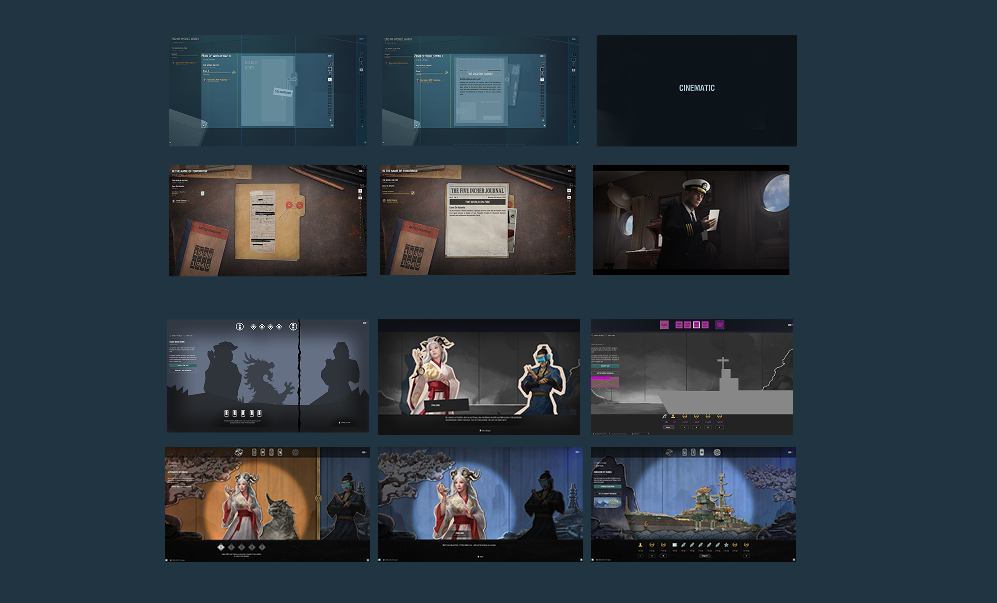
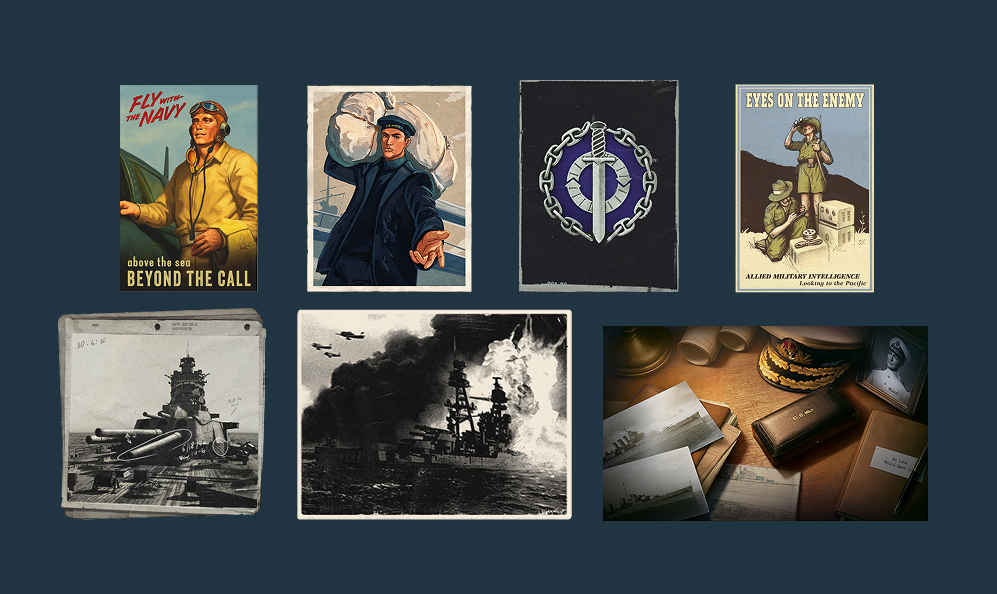
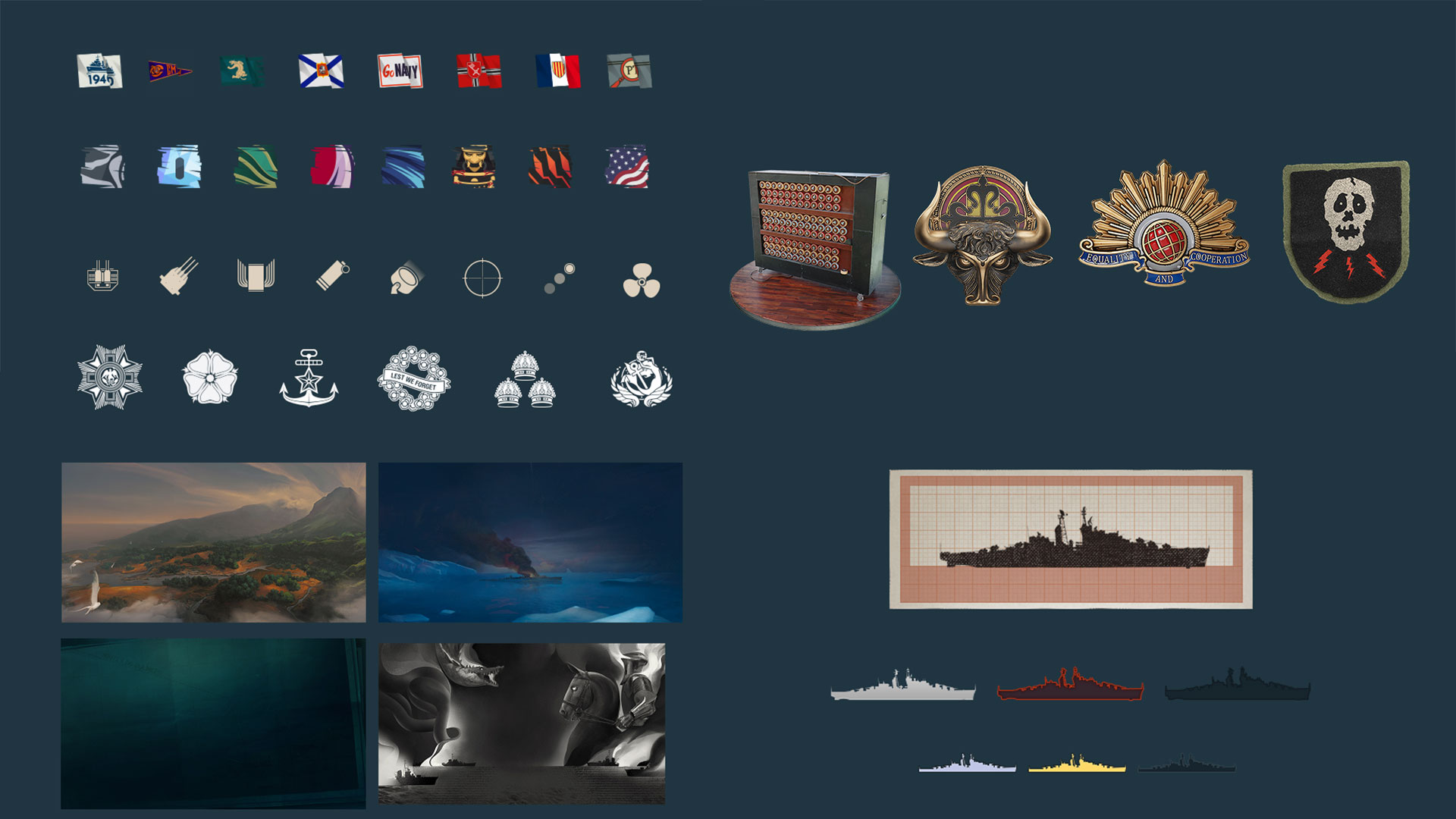
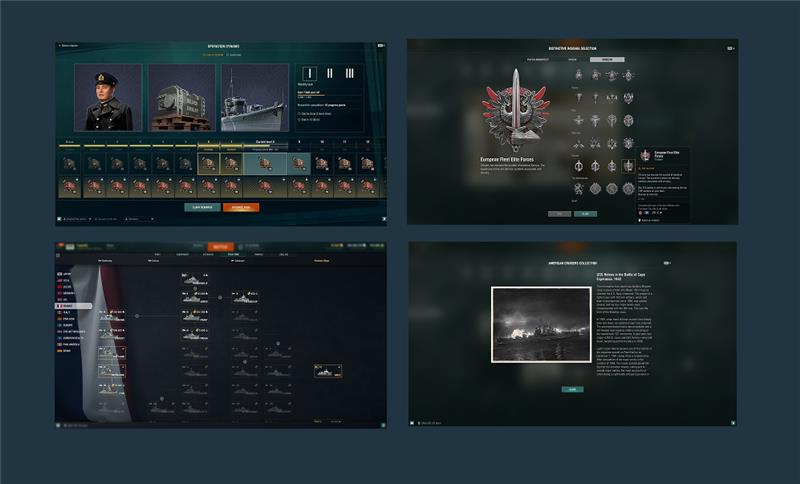
- Digital illustration: Producing high-quality digital graphics and paintings, ranging from full-screen background images to highly detailed digital miniatures (both skeuomorphic and flat designs).
- UI & navigation: Elaborating interface elements to ensure seamless player navigation and interaction.
- Technical artistry: Working with vector images and creating 3D models specifically for subsequent 2D rendering.
- Outsourcing management: Writing comprehensive art guides, preparing task briefs, conducting art direction, and adapting outsourced assets for implementation in the game client.
The Production Pipeline
Our artists do not work in isolation. The creation of standard features, non-standard features, and ongoing content follows a highly structured, collaborative pipeline designed to maintain quality and narrative consistency.
While the specifics vary depending on the asset, our core production cycle involves the following stages:
1. The initial request
Every project begins with a brief from a game or interface designer. For complex, non-standard features, this often starts at the HLUID (High-Level User Interface Design) stage. Artists are briefed on feature goals, game mechanics, expected art "wrapping," and the basic narrative component.
2. Concepting and collaboration
Artists produce draft visual concepts and establish a pool of visual references. This stage requires heavy cross-departmental collaboration. Artists align their concepts with historical consultants, sound designers, writers, and 3D environment teams to ensure absolute consistency with the game's world.
3. Mid-detail refinement
Once the initial concept is approved, artists align the precise art brief with the UI designer and technical art specialists. Typical UI and content assets are refined to a mid-detail level to ensure they function within the intended interactive framework.
4. Detailed refinement and integration
In this phase, the entire pool of art assets is brought to a high level of fidelity. Artists work closely with tech art specialists to test these refined assets directly in the game build, ensuring technical viability before they are uploaded to the feature branch.
5. Polishing
Following an intermediate art review, final adjustments are made. The team resolves any visual bugs, fixes inconsistencies, and polishes the assets to meet Wargaming’s standard of quality.
The Expectations
Joining the 2D art team requires more than just exceptional illustration skills. It requires a strategic approach to design and a deep understanding of game development pipelines. If you are stepping into this role, here is what is expected of you:
- Cross-disciplinary collaboration: You must be comfortable communicating daily with technical specialists, historical consultants, and designers. Your art must serve the game's mechanics and narrative just as much as its aesthetic goals.
- Adaptability: The ability to pivot between different styles and formats is crucial. A single week might involve painting a full-screen illustration, designing flat vector icons, and modeling a 3D asset for rendering.
- Technical awareness: You are expected to understand how your art functions within a game client. Working alongside tech artists to test assets in-build is a standard part of the job.
- Leadership in production: You will be trusted to compile visual reference pools, write comprehensive art guides, and provide clear art direction and supervision to external outsourcing teams.
Ready to make an impact?
We are always looking for structured, highly skilled artists who thrive in a collaborative, fast-paced development environment. If our pipeline aligns with your professional methodology, we encourage you to join us!